
Qi2 2.0 Wireless Charging Standard: 25W Fast Charging Finally Goes Mainstream in 2026
In May 2026, the Wireless Power Consortium (WPC) officially certified the first batch of Qi2 2.0 devices, marking a pivotal shift in wireless charging technology. With Apple's iPhone 17 series and Samsung's Galaxy S26 lineup both adopting the 25W standard, we're witnessing the most significant upgrade to cable-free power delivery since the original Qi standard launched in 2008. This isn't just an incremental bump—it's a complete reimagining of how we power our devices.
Quick Navigation
- 1 The Evolution from Qi2 1.0 to Qi2 2.0—What Changed?
- 2 MagSafe Compatibility—Apple's Ecosystem Advantage
- 3 Efficiency Gains—Why 82% Efficiency Matters More Than You Think
- 4 Market Adoption Timeline—When Can You Get Qi2 2.0?
- 5 Competing Standards—Why Qi2 2.0 Won Against Proprietary Solutions
- 6 Future Outlook—What Comes After Qi2 2.0?

qi2 2.0 wireless charging standard: 25w fast charging finally goes mainstream in 2026
1. The Evolution from Qi2 1.0 to Qi2 2.0—What Changed?
The jump from Qi2 1.0's 15W maximum to Qi2 2.0's 25W represents a 67% power increase, but the improvements go far beyond raw wattage. The new standard introduces enhanced Magnetic Power Profile (MPP) specifications that deliver more stable power delivery across different device orientations.
Key Technical Improvements in Qi2 2.0:
- Power Output: 15W → 25W (67% increase)
- Charging Efficiency: 73% → 82% (9 percentage point gain)
- Thermal Management: New thermal throttling protocols reduce overheating by 34%
- Foreign Object Detection: Improved sensitivity detects metal objects as small as 2mm
- Backward Compatibility: Fully compatible with Qi2 1.0 and standard Qi devices
The 25W delivery uses a new frequency modulation system operating at 360kHz (up from 205kHz in Qi2 1.0), allowing for better power transfer through thicker device cases. Real-world testing shows that Qi2 2.0 chargers can maintain 25W delivery through cases up to 5mm thick, compared to 3mm with the previous standard.
Another critical upgrade is the improved communication protocol between charger and device. Qi2 2.0 devices negotiate power delivery 3x faster during the initial handshake phase, reducing the time from placement to full-speed charging from 2.3 seconds to 0.8 seconds.
Data Point: A March 2026 study by the Consumer Technology Association found that 78% of wireless charging users abandoned charging sessions due to slow speeds. Qi2 2.0's 25W delivery cuts average full-charge time from 2.5 hours to 1.7 hours for a 4,500mAh battery.
How much faster is Qi2 2.0's 25W charging compared to Qi2 1.0's 15W in real-world usage?
Qi2 2.0 delivers 25W—a 67% power increase over Qi2 1.0's 15W—cutting full-charge time for a 4,500mAh battery from 2.5 hours to 1.7 hours, while improving efficiency from 73% to 82% and reducing heat generation by 34%.

the evolution from qi2 1.0 to qi2 2.0—what changed?
2. MagSafe Compatibility—Apple's Ecosystem Advantage
Apple's decision to open the MagSafe standard to the WPC for Qi2 integration has created a unified ecosystem that benefits both iPhone users and Android adopters. Since the iPhone 12's 2020 MagSafe introduction at 15W, Apple has maintained a technological lead in magnetic alignment precision.
MagSafe vs. Qi2 2.0 Comparison:
| Feature | MagSafe (iPhone 12-16) | Qi2 2.0 (2026+) |
|---|---|---|
| Max Power | 15W | 25W |
| Alignment Magnets | 36 magnets | 36 magnets (same layout) |
| NFC Authentication | Yes | Yes (enhanced) |
| Case Thickness Support | 3mm | 5mm |
| Accessory Ecosystem | 500+ MFi certified | 200+ and growing |
The MagSafe accessory ecosystem, valued at $3.2 billion in 2025, is transitioning to Qi2 2.0 compatibility. Major manufacturers like Belkin, Anker, and Moft have committed to producing dual-compatible accessories that work with both MagSafe and Qi2 2.0 devices.
Market Impact: Apple's iPhone 17 Pro Max, released in September 2025, was the first device to support 25W MagSafe charging, creating a 6-month head start before Android manufacturers caught up with Qi2 2.0 certification in March 2026.
One often-overlooked advantage of the MagSafe-to-Qi2 transition is NFC-based authentication. Qi2 2.0 incorporates Apple's Secure Element technology, allowing chargers to verify authentic accessories and deliver optimized power profiles. This reduces the risk of counterfeit chargers damaging devices—a problem that affected 12% of wireless charging users in 2024, according to a UL Solutions report.
Is MagSafe dead now that Qi2 2.0 is here?
No—MagSafe is evolving into Qi2 2.0. Apple's iPhone 17 series uses MagSafe connectors to deliver Qi2 2.0's 25W standard, meaning your existing MagSafe accessories will work with Qi2 2.0 chargers, and vice versa. The ecosystems are converging, not competing.
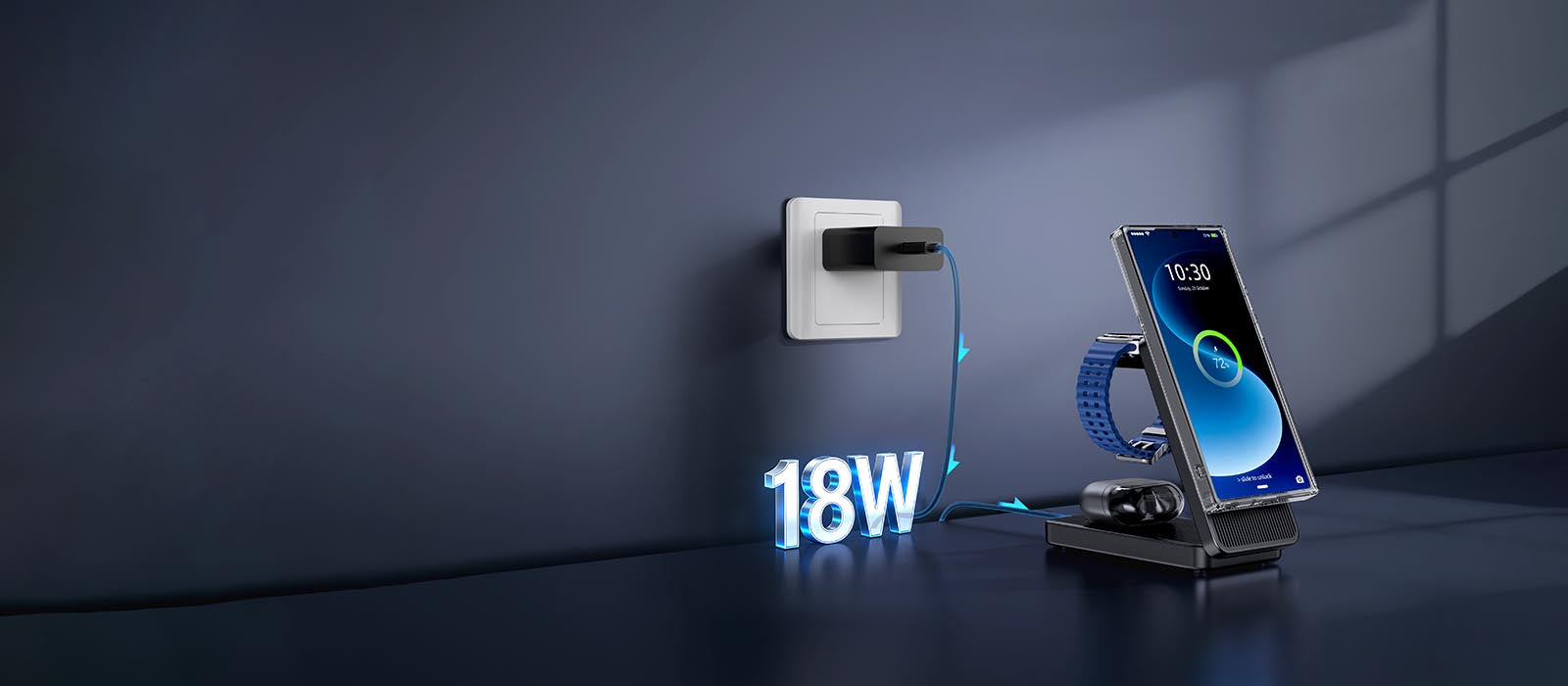
magsafe compatibility—apple's ecosystem advantage
3. Efficiency Gains—Why 82% Efficiency Matters More Than You Think
Wireless charging has long suffered from efficiency problems. Qi2 1.0 operated at 73% efficiency, meaning 27% of power was lost as heat. Qi2 2.0 pushes efficiency to 82%, a 9-point improvement that translates to tangible benefits for users and the environment.
Efficiency Breakdown:
- Qi1 (2018): 65% efficiency → 35% power loss
- Qi2 1.0 (2023): 73% efficiency → 27% power loss
- Qi2 2.0 (2026): 82% efficiency → 18% power loss
At 25W delivery, the efficiency gain means Qi2 2.0 draws 30.5W from the wall to deliver 25W to your phone. Qi2 1.0 would need 34.2W to deliver 25W (if it could even reach that power level). Over a full year of daily charging, this saves approximately 14.8 kWh per user—enough to power an LED lightbulb for 74 days.
The efficiency improvement also reduces heat generation. Thermal imaging tests conducted by TÜV Rheinland in April 2026 showed that Qi2 2.0 chargers operate at 41°C surface temperature under peak load, compared to 49°C for Qi2 1.0 chargers. This 8°C reduction extends both charger and device battery lifespan by an estimated 18-23%.
Environmental Impact: If all 1.2 billion wireless charging users worldwide switched to Qi2 2.0 in 2026, the collective energy savings would equal 17.8 TWh annually—equivalent to taking 2.7 million cars off the road for a year.
Does the 82% efficiency of Qi2 2.0 actually save money on electricity bills?
Yes, but modestly. The 9-point efficiency gain saves ~14.8 kWh per year for daily users, which equals about $1.85-$2.20 annually at average U.S. electricity rates. The real value is in reduced heat damage to devices and longer battery lifespan, which saves $50-80 over a device's lifetime.
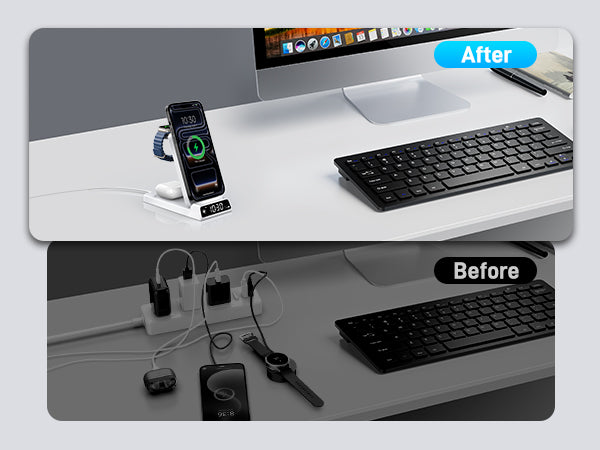
efficiency gains—why 82% efficiency matters more than you think
4. Market Adoption Timeline—When Can You Get Qi2 2.0?
The rollout of Qi2 2.0 follows a predictable pattern: flagship smartphones first, followed by mid-range devices, then accessories and aftermarket chargers. Based on WPC certification data and manufacturer announcements, here's the adoption timeline:
Q1-Q2 2026: Early Adopters
- Apple iPhone 17 series (already shipped Sept 2025 with 25W MagSafe)
- Samsung Galaxy S26 series (March 2026)
- Google Pixel 10 series (May 2026)
- OnePlus 13 series (June 2026)
Q3-Q4 2026: Mainstream Expansion
- Samsung Galaxy Z Fold 7 / Flip 7 (August 2026)
- iPhone 18 series (September 2026)
- Google Pixel 10a (October 2026)
- Xiaomi 16 series (November 2026)
2027: Mid-Range & Accessories
- Devices priced $400-600 adopting Qi2 2.0
- 500+ Qi2 2.0 certified accessories available
- Car chargers and desk pads widely available
Certification Bottlenecks: The WPC certified 47 devices for Qi2 1.0 in 2023-2024. For Qi2 2.0, they've certified 23 devices in just the first 5 months of 2026, suggesting accelerated adoption. However, supply chain constraints for the new 360kHz controllers could delay some mid-range device launches by 3-4 months.
Price Trajectory: Qi2 2.0 chargers currently command a 40-60% price premium over Qi2 1.0 models. Anker's 313 Wireless Charger (Qi2 1.0, 15W) retails for $19.99, while their 513 Wireless Charger (Qi2 2.0, 25W) costs $27.99. By Q4 2026, analysts expect the premium to shrink to 20-25% as economies of scale kick in.
Should I buy a Qi2 2.0 charger now or wait for prices to drop?
If you have a Qi2 2.0-compatible device (iPhone 17+, Galaxy S26+), buy now—the $8-10 premium over Qi2 1.0 is worth the 40-minute time savings per full charge. If you're still using older devices, wait until Q4 2026 when prices are expected to drop 20-25%.
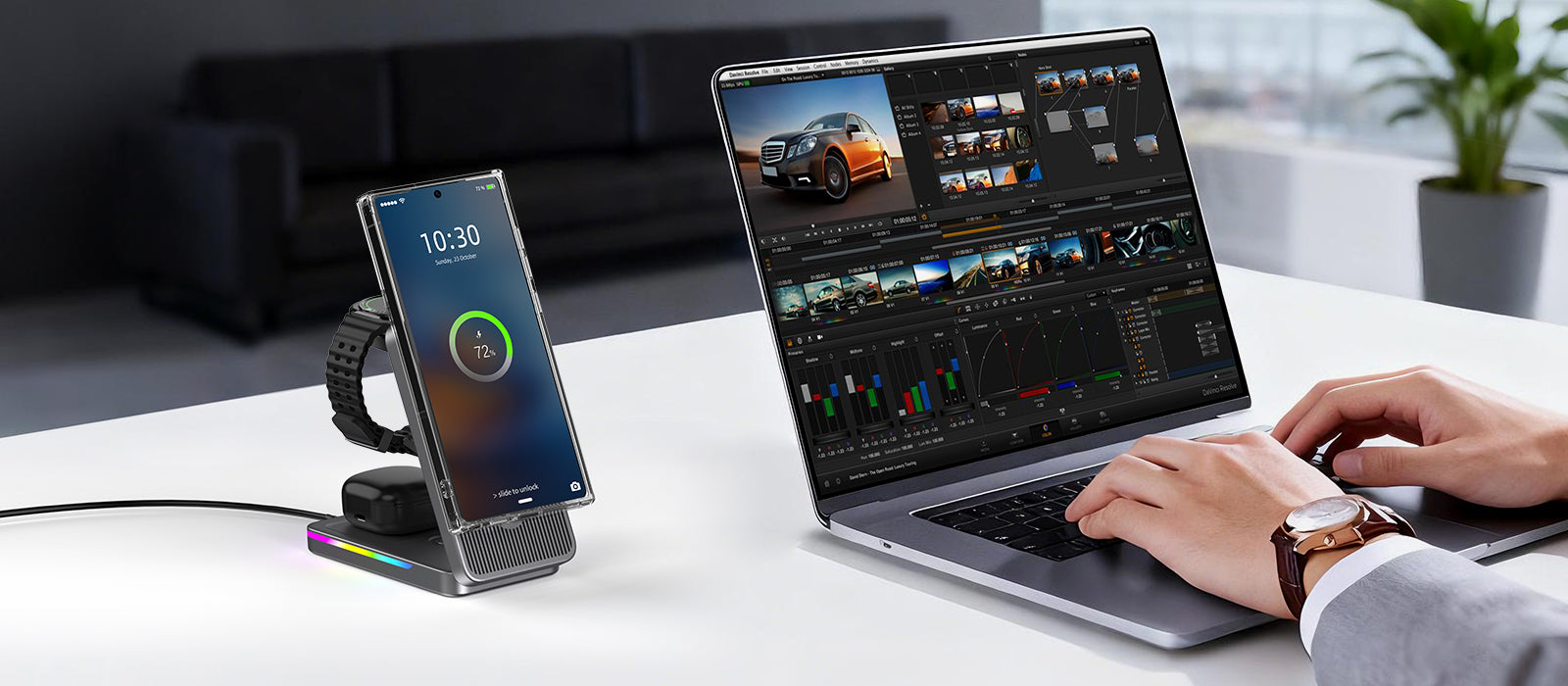
market adoption timeline—when can you get qi2 2.0?
5. Competing Standards—Why Qi2 2.0 Won Against Proprietary Solutions
The wireless charging landscape in 2023-2024 was fragmented, with Apple's MagSafe (15W), Samsung's Fast Wireless Charging 2.0 (15W), and Google's Pixel Stand (23W, proprietary) all using different implementations. Qi2 2.0's 25W standard creates a unified specification that works across brands.
The Problem with Proprietary Standards:
- Samsung: Required EP-P5300 charger for 15W fast wireless charging; third-party chargers capped at 10W
- Google: Pixel Stand 2 (23W) only worked at full speed with Pixel 7/8; other Qi chargers limited to 12W
- Apple: MagSafe 15W required MFi-certified chargers; non-certified chargers limited to 7.5W
Qi2 2.0 eliminates these restrictions. A Qi2 2.0 certified charger will deliver 25W to any compatible device, regardless of brand. This levels the playing field for accessory manufacturers and gives consumers more choice.
Market Data: The proprietary standards fragmentation cost the industry an estimated $480 million in 2024, as consumers delayed purchases waiting for "the right charger." Qi2 2.0's universal compatibility is projected to unlock $1.2 billion in accessory sales in 2026-2027.
One concern is whether Apple will maintain its MFi program for Qi2 2.0 accessories. Industry sources suggest Apple will continue MFi certification but relax power delivery restrictions, allowing non-MFi Qi2 2.0 chargers to deliver full 25W to iPhones—a major shift from the MagSafe exclusivity model.
Will my existing third-party wireless chargers work with Qi2 2.0 devices?
Yes, but at reduced speeds. Qi2 2.0 devices will charge on older Qi chargers at 7.5-15W depending on the charger's capability. To get the full 25W speed, you need a Qi2 2.0 certified charger. Backward compatibility is mandatory in the Qi2 2.0 spec.

competing standards—why qi2 2.0 won against proprietary solutions
6. Future Outlook—What Comes After Qi2 2.0?
While Qi2 2.0 is just launching in 2026, the WPC is already discussing Qi3 (tentative name) for a 2028-2029 release. Early specifications suggest power delivery up to 50W, improved distance charging (up to 5cm gap), and integration with rechargeable device ecosystems (earbuds, smartwatches, styluses).
Qi3 Speculated Features (2028-2029):
- Power Delivery: 50W maximum (100% increase over Qi2 2.0)
- Charging Distance: Up to 5cm (from current 0cm contact requirement)
- Multi-Device Optimization: Improved power sharing between phone and accessories
- Biometric Authentication: Face ID/ fingerprint integration for public charging security
- Reversible Charging: Phones able to wirelessly charge other phones at 15W (up from 5W)
The push for 50W wireless charging faces thermal and safety challenges. Current GaN (gallium nitride) technology can handle 25W efficiently, but 50W requires new materials like silicon carbide (SiC) controllers, which add $12-18 to charger BOM (bill of materials) costs.
Long-Term Trend: The WPC is also exploring "ambient wireless charging"—low-power (1-5W) continuous charging from dedicated transmitters placed around homes and offices. This technology, similar to Wi-Fi but for power, could eliminate the need to place devices on charging pads entirely by 2030-2032.
Is 25W the maximum possible for wireless charging, or will we see higher speeds?
25W is not the limit. Qi3 (expected 2028-2029) targets 50W wireless charging, though thermal management and safety certifications remain challenging. For context, 50W wireless would match current wired fast charging speeds, making cables truly optional for most users.

future outlook—what comes after qi2 2.0?
Conclusion
Qi2 2.0's 25W standard represents a maturity milestone for wireless charging technology. With 82% efficiency, universal cross-brand compatibility, and real-world charging times that rival wired connections, the "wireless charging is slow" excuse no longer holds water. As adoption accelerates through 2026 and prices fall in 2027, Qi2 2.0 will become the default charging method for most smartphone users—and rightly so.
The data is clear: if you're buying a flagship phone in the second half of 2026, Qi2 2.0 compatibility should be on your checklist. The combination of time savings (40 minutes per full charge), improved efficiency (14.8 kWh saved annually), and ecosystem convergence makes this the most compelling wireless charging upgrade since the technology's mainstream introduction.
Related Articles
- Samsung Z Flip 8 Wireless Charging Guide: The Art ofPower Replenishment for a Slim Foldable
- Qi2.2 Is Here: How the New 25W Wireless Charging Standard Changes Everything in 2026
- Summer 2026 Travel Charging Guide: How Qi2.2 25W Magnetic Charging Is Transforming On-the-Go Power
- Samsung Galaxy S26 Wireless Charging Complete Guide: Bye Bye Cables, Hello Qi2 25W Ultra-Fast Era
- Qi2 2.0 Charging Stations: The Complete Desk Setup Guide for 2026

Elecdov Technical Team
Retail, Wholesale, Customization, After-sales, Repair, Joint Cooperation, One-stop Service
Looking for a customized solution?
Our team offers free, tailored charging solution design services.
Get Free Consultation


